
Custom Plastic Injection Molding – China
China Rapid Injection Molding Services
From Prototypes to Mass Production
We help international engineering and procurement teams manufacture custom plastic parts in China. From rapid tooling for low-volume runs to production tooling for higher volumes, we review your design, material requirements, and production goals before tooling begins.
- Direct Factory – Low-volume production and mass manufacturing
- Aluminum rapid tooling and hardened steel tooling options
- Insert molding and overmolding for suitable designs
- DFM review and English-speaking project communication
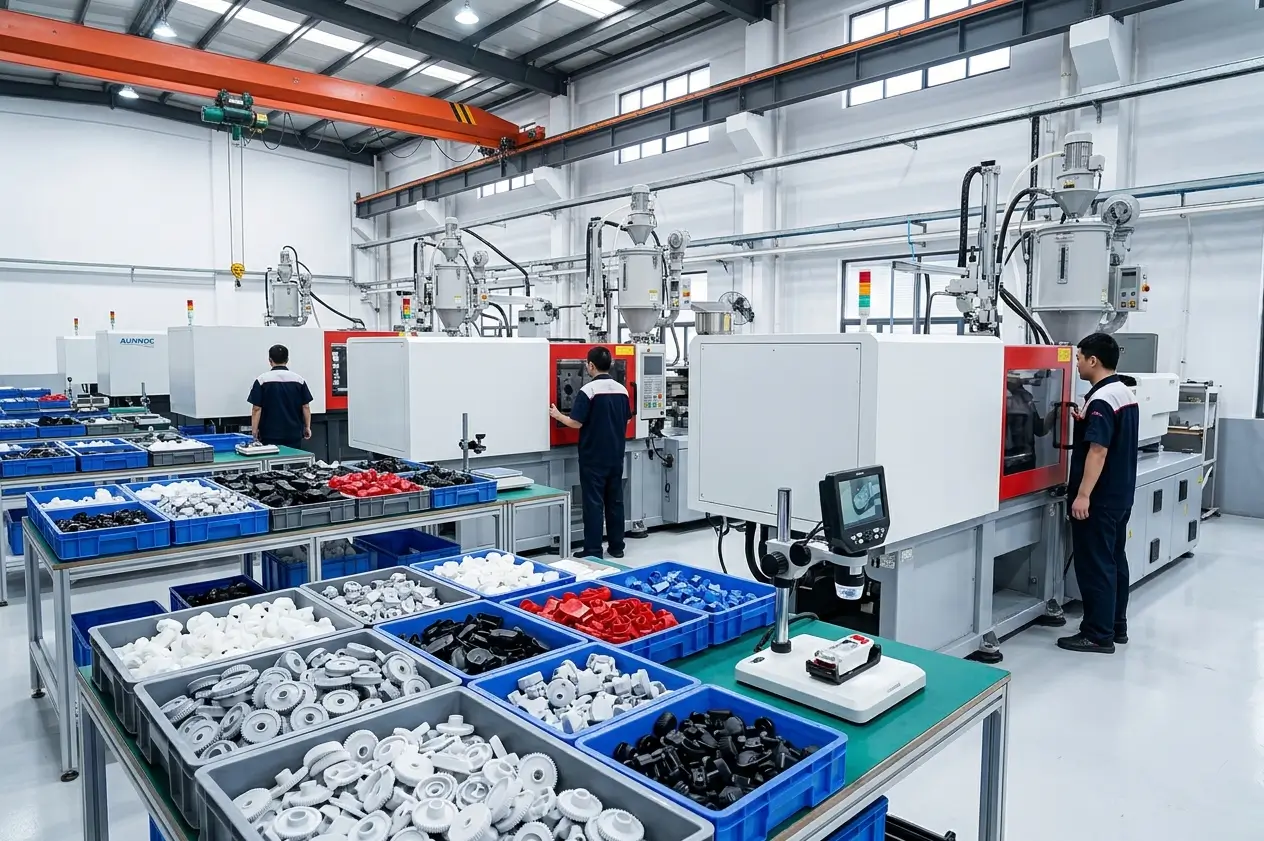
Engineering-Led Manufacturing
Trusted Chinese Injection Molding Partner for Your Production Goals
A competitive molding quote should account for more than unit price. Tooling design, resin selection, shrinkage, part geometry, surface requirements, and dimensional inspection all affect the final result.
We work with overseas customers to review these requirements early, discuss the tooling strategy, and clarify the specifications that matter to your application. Our goal is to make the transition from CAD model to molded component more predictable.
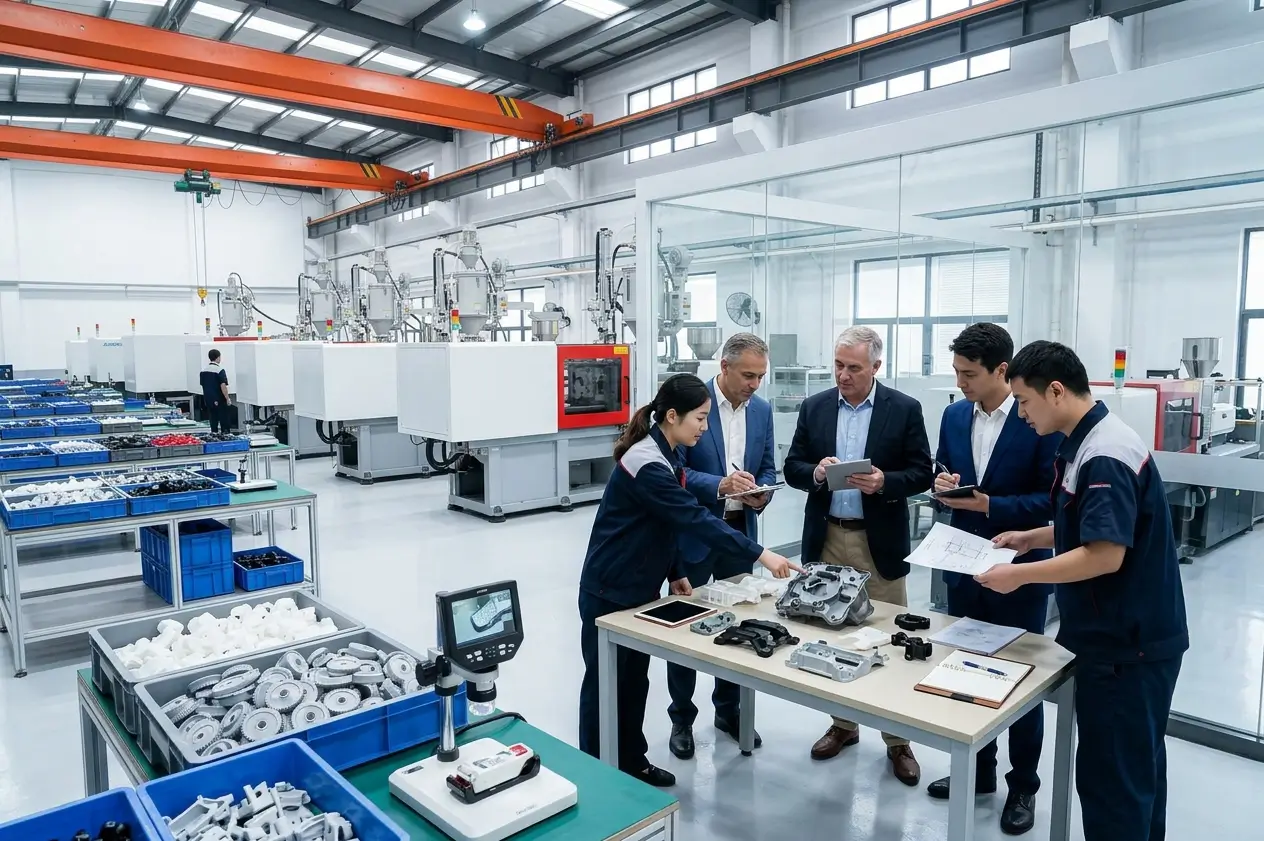
Our Injection Molding Capabilities
From Low-Volume Injection Molding to Mass Production
We help you select a molding and tooling strategy around your part design, material, target quantity, and expected production life. Our injection molding services support product validation, bridge production, and ongoing manufacturing programs.
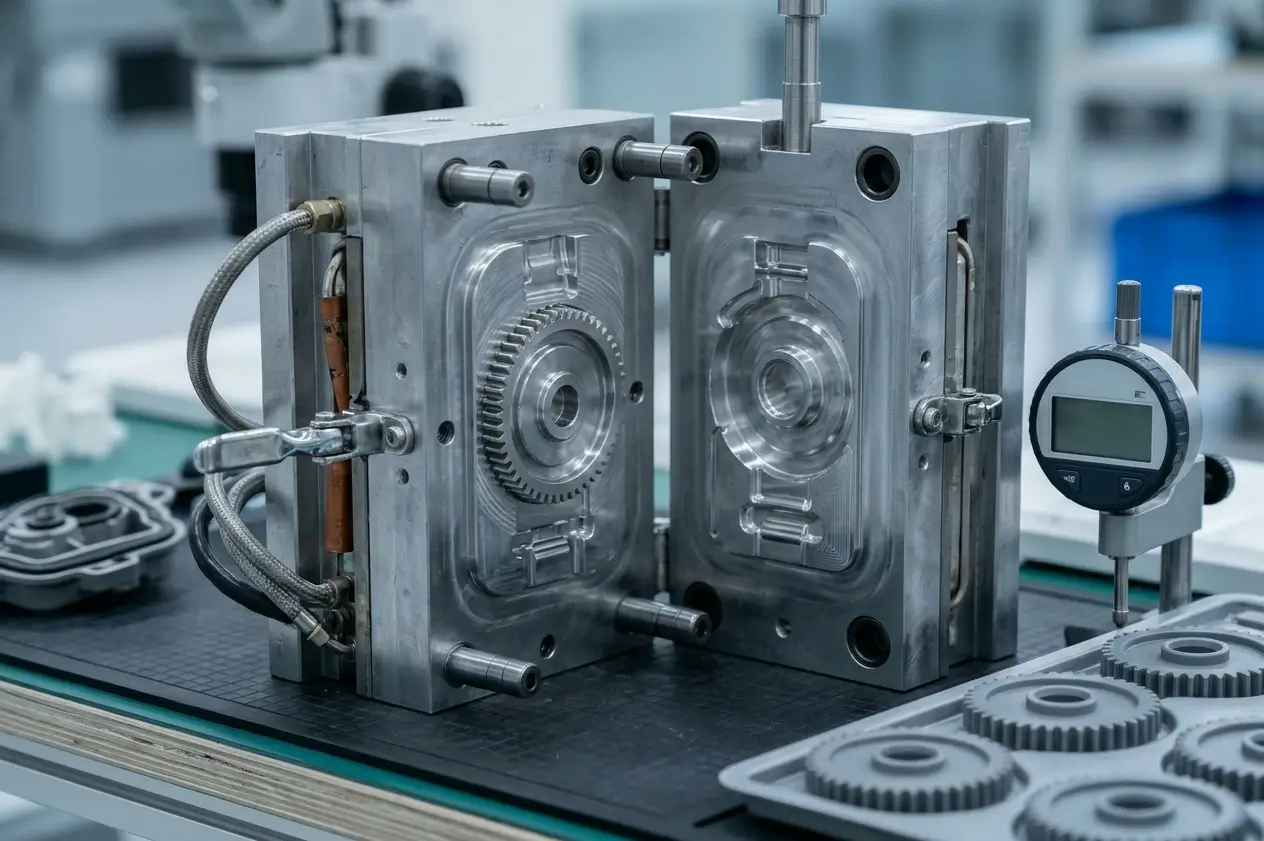
Rapid Tooling & Low-Volume Production
For pilot runs and lower-volume requirements, aluminum tooling may provide a practical route to molded parts before committing to production tooling. We assess suitability against geometry, resin, finish, and expected mold life.
- Prototype and pilot production
- Bridge manufacturing before volume ramp-up
- Design and material validation
- Tooling strategy based on projected demand
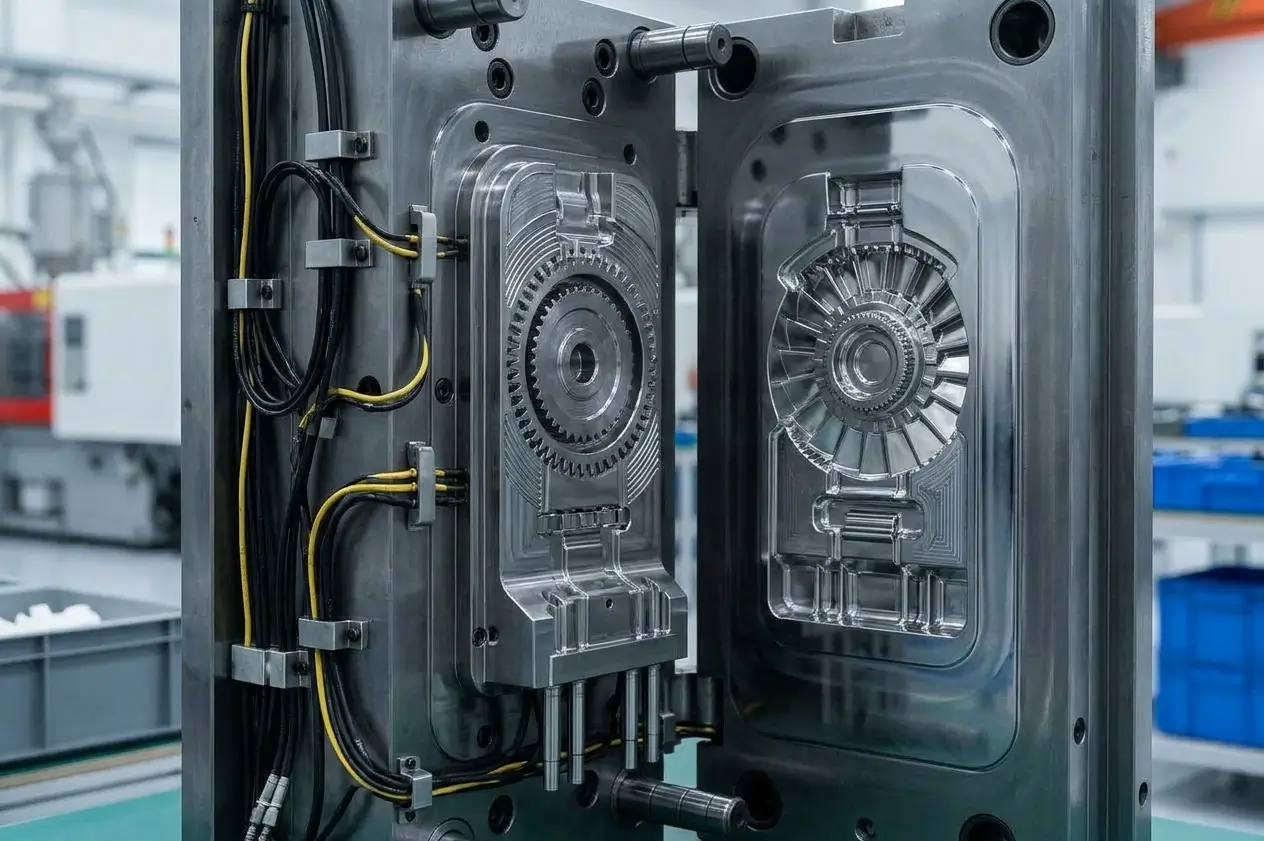
Production Tooling & High-Volume Manufacturing
Hardened steel tooling can be considered for sustained production where tool life, repeatability, and cycle efficiency are important. Mold construction and process requirements are defined for the selected resin and component.
- Recurring and larger production orders
- Tool-life planning
- Process and quality requirements defined upfront
- Production scaling based on demand forecasts
Insert Molding & Overmolding
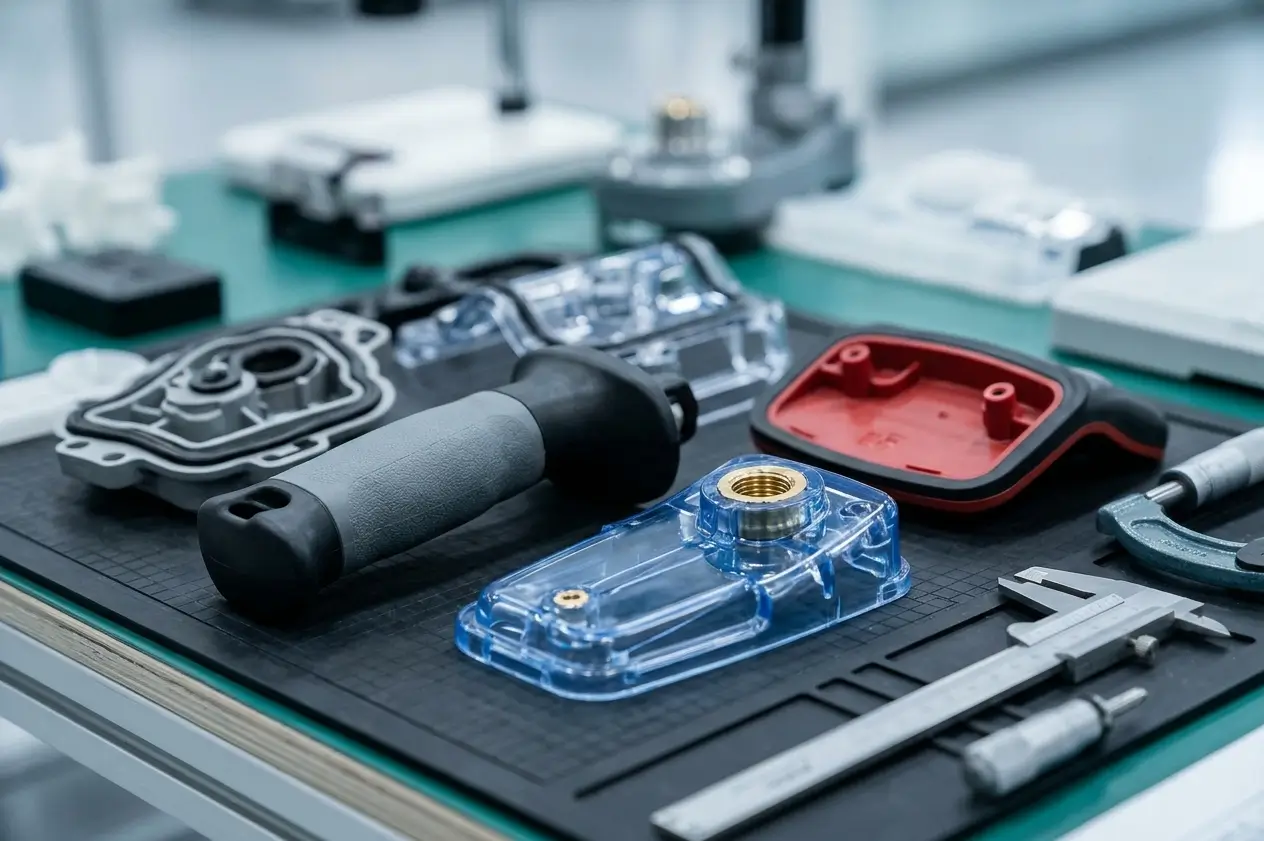
Where the design allows, insert molding can integrate metal components into a plastic part. Overmolding can combine compatible materials to create rigid and soft-touch features in one assembly.
- Threaded inserts and embedded components
- Rigid substrates with flexible overmolded features
- Insert retention and assembly interfaces
- Material compatibility and bonding review
Why work with an injection molding partner in China?
China-Based Injection Molding, With Engineering Communication You Can Rely On
Outsourcing plastic injection molding to China can create opportunities to optimize tooling and production costs. But a competitive quote is only valuable when the technical requirements are understood, quality expectations are documented, and communication stays clear throughout the project.
At HLHCNC, we work with international customers through English-speaking project engineering support. Our aim is to make each stage—from the initial design review to tooling decisions and production acceptance—clear and manageable for your team.
Direct English-Speaking Engineering Support
We help clarify drawings, resin grades, dimensional tolerances, cosmetic requirements, and tooling questions. Our goal is to reduce avoidable back-and-forth and make technical decisions easier across time zones.
Requirements Defined Before Production
We encourage customers to document critical dimensions, material specifications, appearance standards, drawing revisions, and inspection expectations before tooling and production commitments.
Inspection Planned Around Your Part
Our stated quality resources include CMMs, optical projectors, and material certification records. We work toward an inspection plan appropriate to the specified part characteristics and agreed acceptance criteria.
Tooling Strategy Matched to Demand
We help evaluate rapid aluminum tooling against production steel tooling based on expected quantities, component complexity, tool-life requirements, and total production economics.
Clear Scope for Documentation and IP Protection
Agree on inspection records, material documentation, ownership of tooling, confidentiality terms, and permitted use of CAD files before the project proceeds.
Technical Specifications
Injection Molding Capabilities & Tolerances
Molded-part dimensions and performance depend on resin grade, component geometry, tooling, shrinkage, and process conditions. We recommend defining critical features and acceptance criteria before mold construction.
| Parameter | Capability / Consideration | What We Need to Confirm |
|---|---|---|
| Production volume | Low-volume runs through large-scale manufacturing | Initial quantity, annual forecast, batch sizes, and ramp-up plans |
| Mold construction | Aluminum rapid tooling or hardened steel production tooling | Resin, expected tool life, complexity, and production requirements |
| Dimensional tolerances | Project-specific requirements defined against the part drawing | Critical dimensions, datums, GD&T, measurement method, and resin |
| Wall thickness | Designed for material flow, cooling, and part performance | Wall transitions, thick sections, filling, warpage, and sink-mark risks |
| Draft angles | Dependent on geometry, resin, tool release, and surface texture | Draw direction, textured surfaces, shutoffs, and ejection strategy |
| Ribs and bosses | Designed to support stiffness, fastening, and assembly | Wall transitions, sink risk, stress concentration, and screw retention |
| Undercuts and side actions | Assessed according to part geometry and mold construction | Demolding method, side-action requirements, and tooling complexity |
| Surface finish | Functional, cosmetic, or textured requirements as specified | Gloss or texture standard, gate location, parting line, and allowable marks |
| Insert molding | Metal or other suitable inserts integrated during molding | Insert material, positioning, retention, thermal effects, and tolerances |
| Overmolding | Compatible material combinations for rigid and flexible features | Substrate, overmold resin, adhesion, mechanical retention, and testing |
| Quality inspection | Inspection planning against agreed drawings and acceptance criteria | Sampling plan, critical-feature checks, reports, and material records |
Important: This table describes engineering review areas, not guaranteed numerical limits. Confirm achievable tolerances, tooling life, inspection methods, and documentation for your specific part before order approval.
Plastic Resin Selection
Common Injection Molding Materials
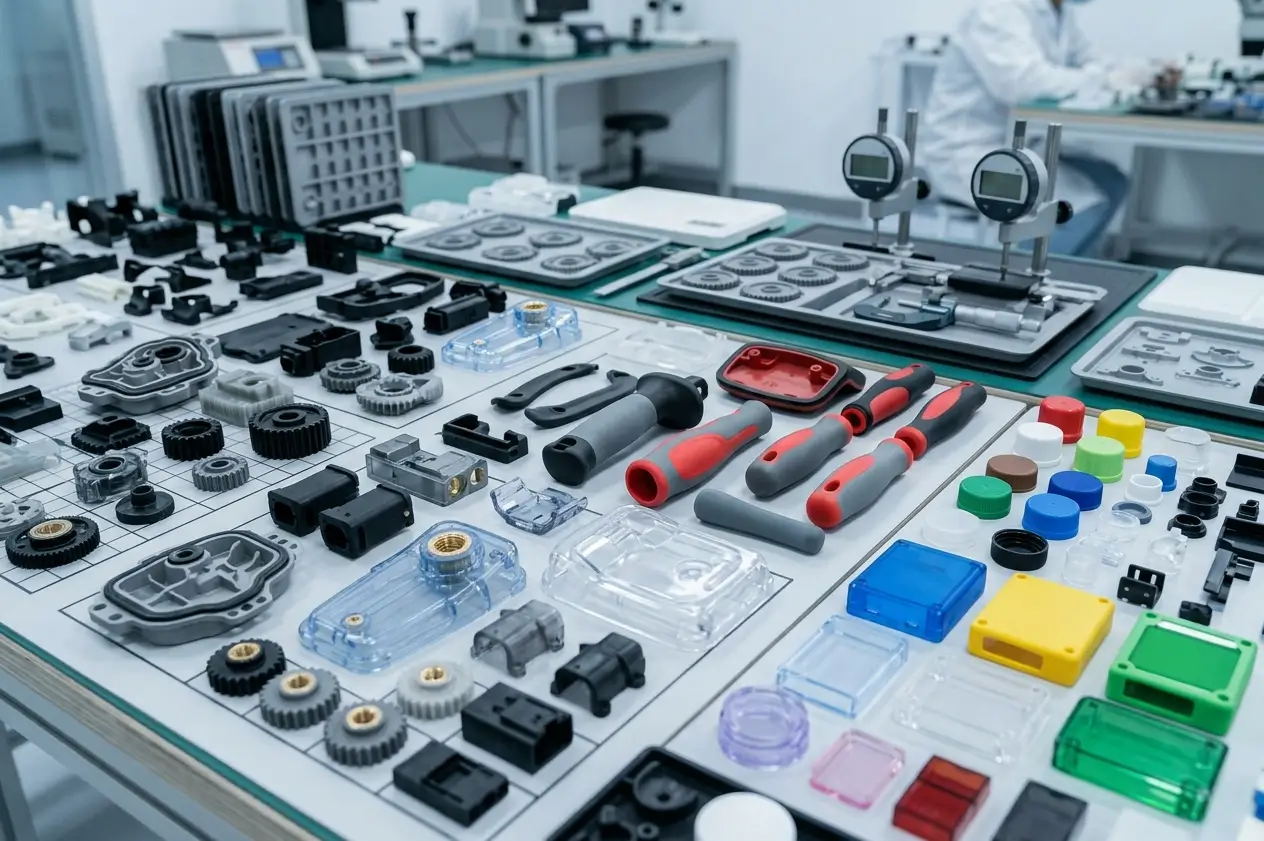
Material selection affects strength, stiffness, impact performance, dimensional stability, chemical resistance, appearance, and cost. We recommend selecting a specific grade against the part’s operating conditions and performance requirements.
ABS
Balanced mechanical performance
Commonly used for housings, covers, enclosures, and consumer product components requiring impact resistance and good processability.
Review: operating temperature, chemical exposure, and surface appearance.
Polycarbonate (PC)
Impact performance and potential transparency
Considered for protective covers, housings, and components where impact strength or optical properties are important.
Review: optical requirements, stress cracking, and grade-specific processing.
Nylon (PA6 / PA66)
Mechanical and wear-related applications
Used for brackets, clips, gears, and functional components where mechanical performance is required.
Review: moisture absorption, conditioning, reinforcement, and dimensional change.
Polypropylene (PP)
Lightweight and chemically resistant
Common in containers, covers, selected living-hinge designs, and functional parts where the grade meets service requirements.
Review: stiffness, creep, shrinkage, and hinge-cycle requirements.
Acetal (POM)
Low friction and dimensional performance
Often used for gears, bushings, sliding components, and precision mechanical parts.
Review: load, wear, temperature, and compatibility with adjoining materials.
TPE / TPU
Flexible and elastomeric components
Considered for grips, seals, protective features, and flexible components, including suitable overmolding applications.
Review: hardness, tear strength, compression set, and substrate bonding.
PEEK
High-performance engineering thermoplastic
Considered for demanding applications that require elevated temperature performance or chemical resistance.
Review: exact grade, processing capability, operating environment, and cost.
Your Manufacturing Partner in China
Global Project Support, With Engineering Requirements Defined Upfront
We understand that outsourcing injection molding across borders raises practical questions about communication, quality, tooling, intellectual property, and delivery. We address these topics by clarifying requirements and responsibilities before production.
English-Speaking Project Communication
We work with your team to clarify drawing revisions, material specifications, critical features, and open technical questions. Written requirements help reduce ambiguity across time zones.
Quality Planning and Inspection
Agree on acceptance criteria, critical dimensions, inspection methods, sampling, and required records before manufacturing. Material certifications and first-article reports should be explicitly included when required.
Tooling Strategy and Ownership
Clarify tooling scope, maintenance responsibilities, tool-life expectations, storage, ownership, and any transfer conditions in the quotation or contract before the project proceeds.
CAD Files and Intellectual Property
Discuss confidentiality, NDA requirements, file access, and permitted use of design data before sending sensitive information. Contractual protections should be agreed in writing.
Samples and Production Approval
Define how samples will be reviewed, which dimensions or cosmetic features need approval, and what changes require sign-off before full production.
Export and Delivery Coordination
Discuss packaging, shipping destination, delivery terms, required documents, and timing assumptions as part of the order scope. Confirm the agreed shipping arrangement before order release.
We aim to make the manufacturing plan and technical expectations clear before tooling and production begin. Specific inspection reports, certifications, NDA terms, tooling ownership, and logistics commitments must be confirmed for each project.
Our Process
From RFQ to Approved Production
A structured workflow helps align the design, tooling, sample evaluation, and production requirements before each stage proceeds.
RFQ and Design Review
Review CAD files, drawings, material requirements, quantities, critical dimensions, and target delivery.
DFM and Tooling Plan
Discuss mold design considerations, material selection, tooling approach, and potential manufacturing risks.
Quote and Project Approval
Confirm price, tooling scope, production quantities, sample requirements, inspection scope, and schedule assumptions.
Sampling and Production
Evaluate samples against the agreed criteria, resolve approved changes, and proceed with production and quality checks.
Frequently Asked Questions
China Injection Molding Services: FAQs
How much does injection molding in China cost?
The cost depends on part geometry, dimensions, resin, cavity count, mold complexity, surface finish, and production quantity. Tooling is a separate cost consideration from the unit price of molded parts. Submit your CAD model and expected volumes so we can assess a suitable manufacturing route and prepare a project-specific quotation.
What is the minimum order quantity for injection molding?
HLHCNC operates under a no-MOQ policy, but the economics of injection molding depend on setup, tooling, material consumption, and production requirements. Pilot runs may be feasible from around 100 parts under the target service model; the actual minimum and commercial terms must be confirmed for the project.
Can you support low-volume injection molding?
Low-volume production may be possible with rapid tooling, including aluminum molds for suitable applications. Feasibility depends on geometry, material, expected output, and tooling-life requirements. Share your target quantity so the tooling options can be evaluated.
Should I choose aluminum or steel injection molding tooling?
Aluminum tooling may suit bridge production and lower-volume projects where initial tooling investment is a priority. Hardened steel tooling can be more suitable for sustained, higher-volume production where durability and tool life justify the investment. The right choice depends on resin, geometry, production demand, tool-life expectations, and total lifecycle cost.
What tolerances can you achieve with plastic injection molding?
There is no single tolerance value that applies to every molded component. Dimensional results depend on part size, resin shrinkage, geometry, wall thickness, tooling design, and process control. Identify critical dimensions on your drawing so they can be reviewed during DFM and confirmed before production.
Which plastic materials can be injection molded?
Common engineering and production plastics include ABS, PC, PA6/PA66, PP, POM, TPE/TPU, and PEEK, subject to grade and processing requirements. Material selection should reflect mechanical loads, operating temperature, chemical exposure, appearance, and applicable regulatory requirements.
Do you offer insert molding and overmolding?
Yes, we do offer both. These processes can be considered for suitable designs. Insert molding integrates an insert into a molded component, while overmolding combines compatible materials or substrates. Insert retention, material compatibility, bonding, geometry, and tooling complexity need to be reviewed.
How do you manage quality for overseas customers?
We recommend establishing clear acceptance criteria before production, including drawing revisions, material grades, critical dimensions, and inspection requirements. HLHCNC’s stated quality resources include CMMs, optical projectors, and material certification records. Specific inspection plans and reports should be agreed before manufacturing begins.
Can you protect our CAD files and intellectual property?
Your files are safe with us. We make sure IP protection for our global clients. Before sharing proprietary designs, review the applicable confidentiality agreement, file-transfer arrangements, tooling ownership terms, and restrictions on the use of design data. Ask HLHCNC to confirm the protections and contractual terms applicable to your project rather than assuming a particular security certification or policy.
How long does injection molding tooling and production take in China?
Lead time depends on design complexity, mold construction, material availability, tooling validation, sampling, and order quantity. Rapid tooling may support a different schedule from hardened steel production tooling. We recommend confirming separate milestones for tooling, sampling, approval, production, and shipment in the quotation.
What do you need to quote my injection molding project?
Ideally, provide a 3D CAD model, 2D drawing, quantity or annual forecast, preferred resin and color, surface finish, critical tolerances, and shipping destination. If the design or material is not finalized, explain what is still under evaluation so the open questions can be identified.
Can you help us choose the right tooling strategy?
Yes, the tooling discussion should consider expected production volume, tool life, material, part complexity, quality requirements, and total project economics. We recommend reviewing these factors before choosing a mold construction approach.

Dimensional & Cosmetic Requirements
Define Critical Features Before Production
Molded components can be affected by resin shrinkage, wall thickness, gate location, cooling, and part geometry. Critical dimensions and cosmetic zones should be identified during design review.
We recommend providing a 2D drawing alongside your 3D model, with applicable GD&T, datum references, material requirements, and acceptance criteria.
Design for Manufacturability
Let’s Review Your Design Before We Cut the Mold
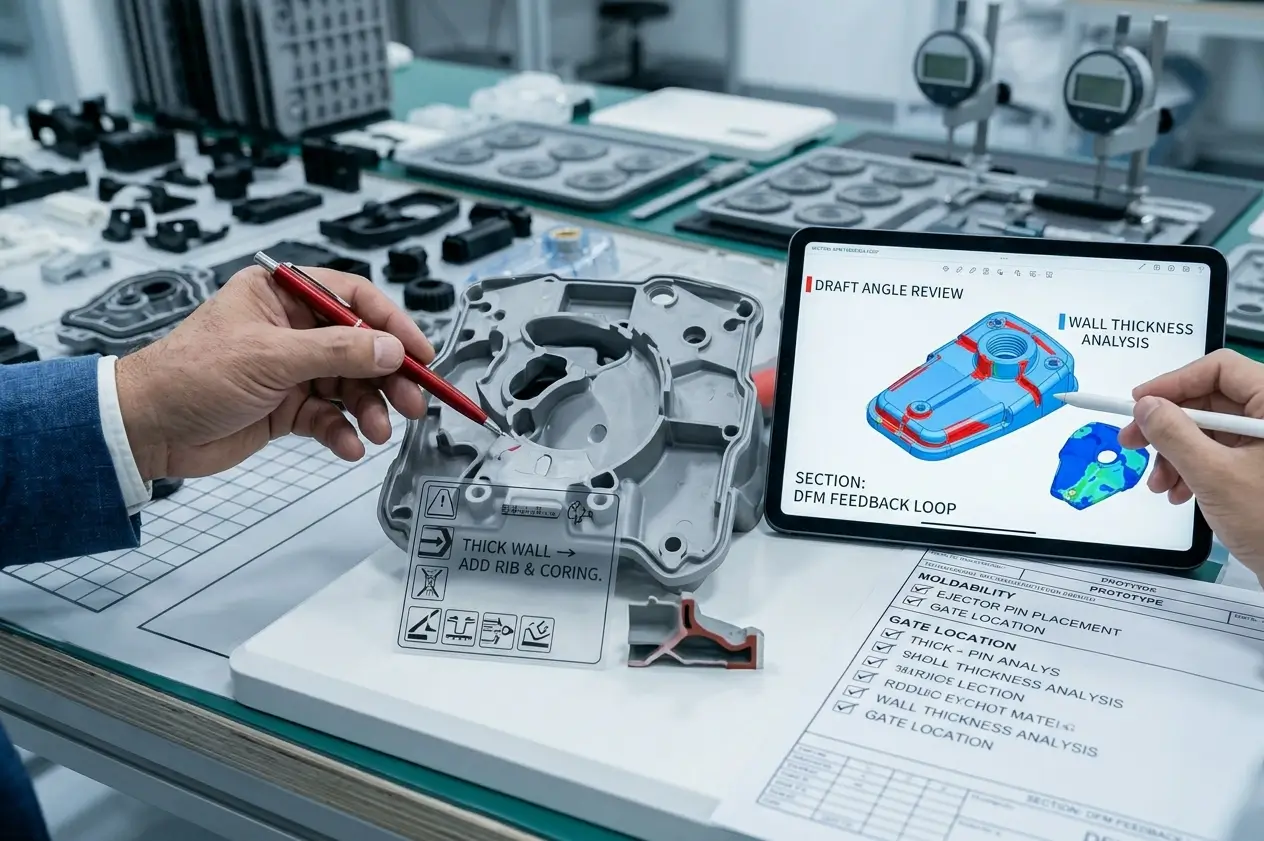
We review the CAD model and available drawings to identify manufacturability questions before tooling starts.
- Wall thickness and potential sink marks
- Draft angles, undercuts, and ejection direction
- Ribs, bosses, and thick-section transitions
- Gate locations, parting lines, and cosmetic surfaces
- Resin shrinkage and critical dimensions
- Insert placement and overmolding compatibility
Request a Project Quote
Share your CAD files, target quantity, preferred material, critical dimensions, and delivery destination.
Suggested formats include STEP, STP, and IGES. Confirm supported formats with your actual quotation workflow.
START YOUR INJECTION MOLDING PROJECT
Your Plastic Part Design Is Ready. Let’s Plan the Right Tooling and Production Route.
Whether you’re validating a new product, planning a pilot run, or sourcing a high-volume plastic component from China, we can help you evaluate material options, moldability, tooling investment, and production requirements.
Send us your CAD model and target quantities to start the conversation.