
CHINA DIE CASTING MANUFACTURER
Custom Die Casting in China
From Tooling to Mass Production
Need a reliable die casting partner in China? We help engineering and procurement teams develop custom metal components, from tooling and initial samples to medium-volume production and multi-million-unit manufacturing programs.
Our die casting capabilities cover aluminum, zinc, and magnesium alloys for structural housings, brackets, automotive components, and electronics enclosures. We work with your CAD models, drawings, material requirements, and production targets to assess manufacturability before tooling begins.
- Aluminum, zinc, and magnesium die casting
- Hot-chamber and cold-chamber process options
- Engineering review before tooling approval
- Project communication for international buyers
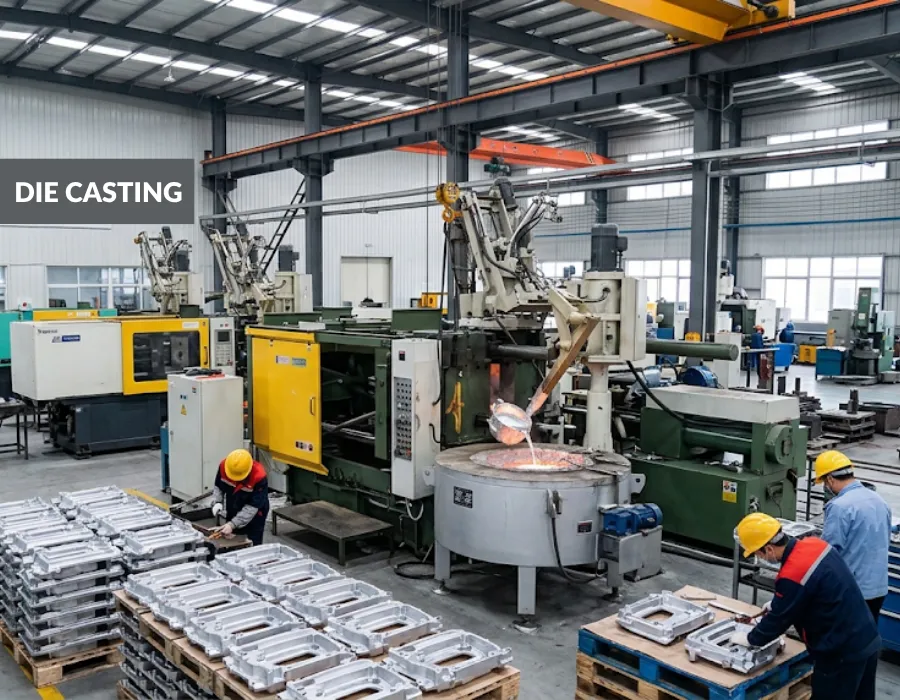
From casting feasibility and tooling strategy to repeat production.
DIE CASTING CAPABILITIES
One Die Casting Partner for Different Production Stages
We understand that a die cast component must satisfy more than a purchase price. Tooling investment, casting geometry, dimensional requirements, finishing, inspection, and forecast quantities all influence the right manufacturing plan. We review these factors with you before committing to a production approach.
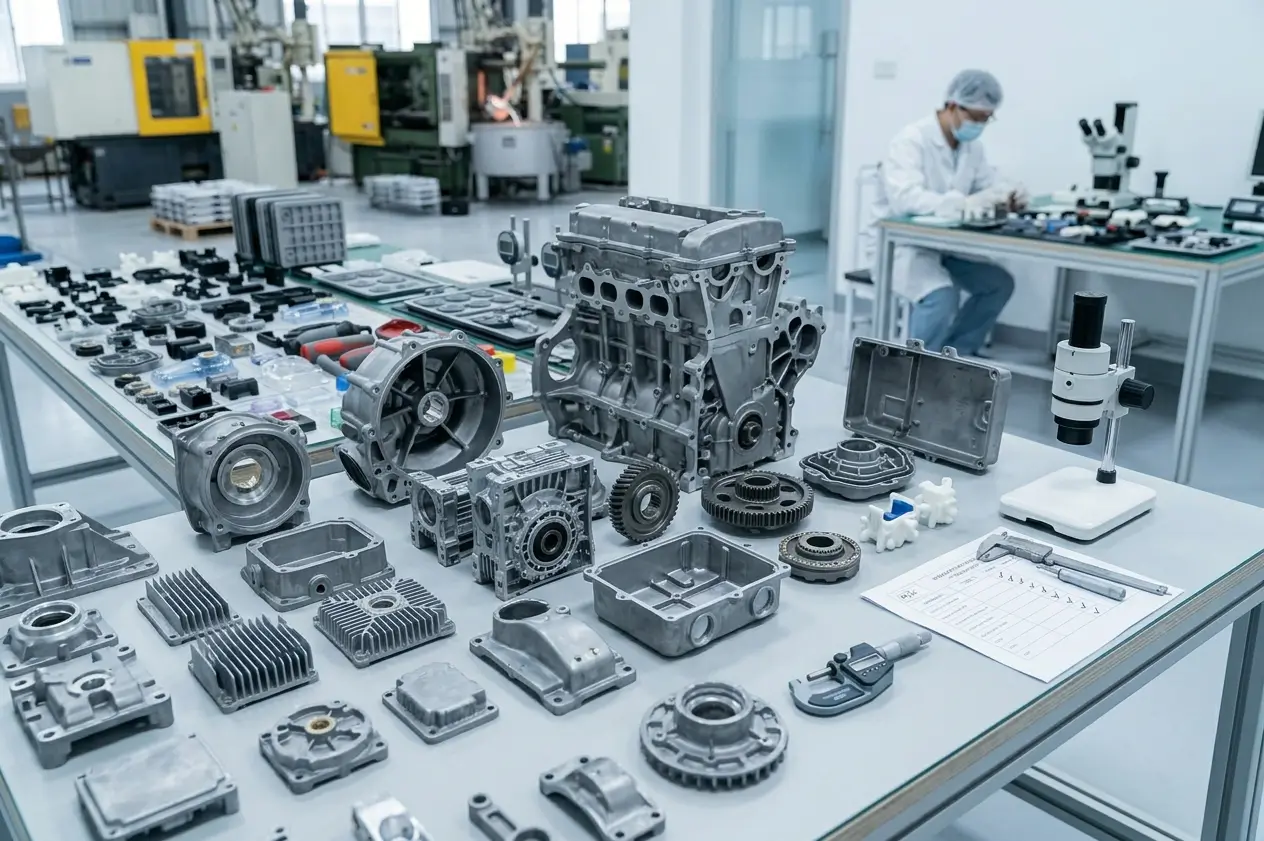
Aluminum Die Casting
For lightweight housings, structural parts, brackets, and components requiring a favorable balance of mass, strength, and production efficiency.
Supported alloys: A380, A360, ADC12.
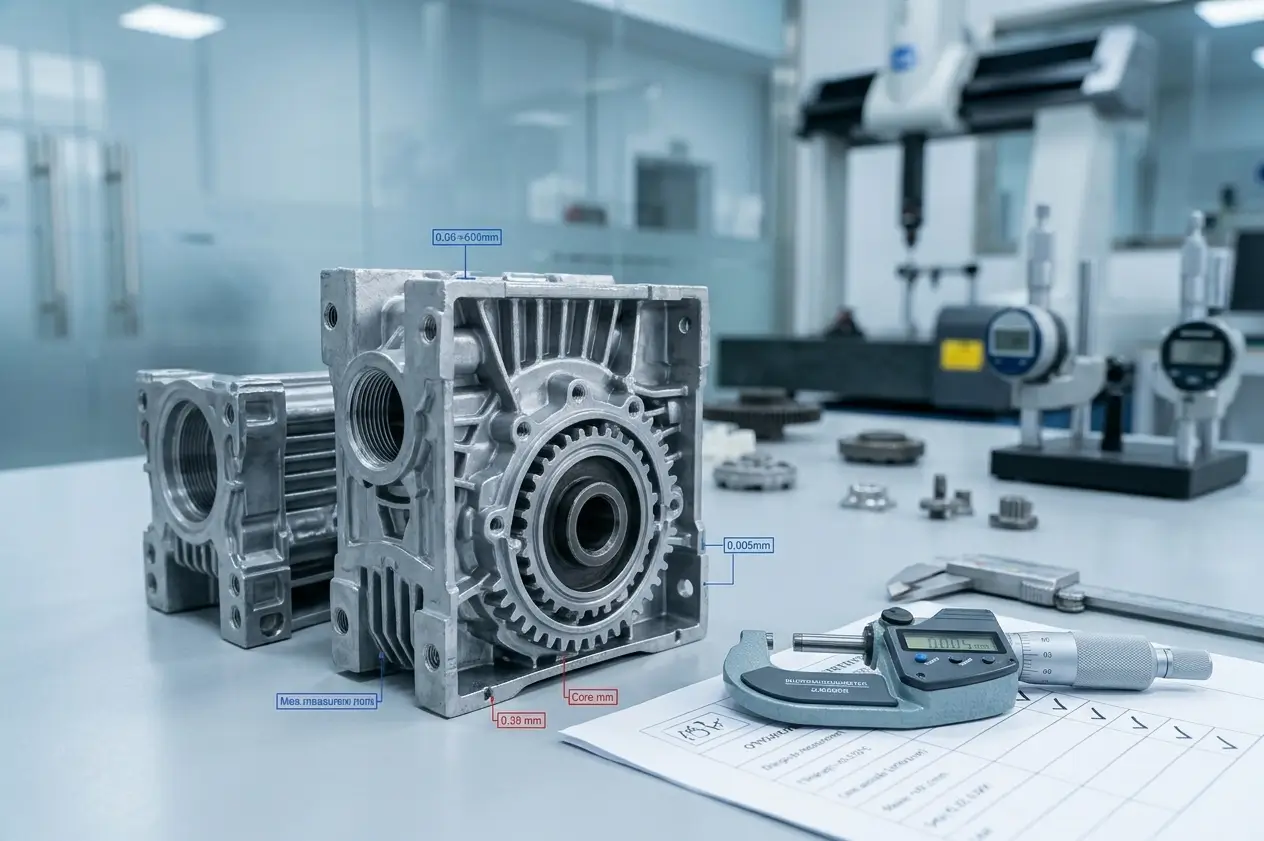
Zinc Die Casting
Suitable for detailed components, compact housings, connectors, hardware, and parts where feature definition and repeatable production are important.
Supported alloys: Zamak 3 and Zamak 5.
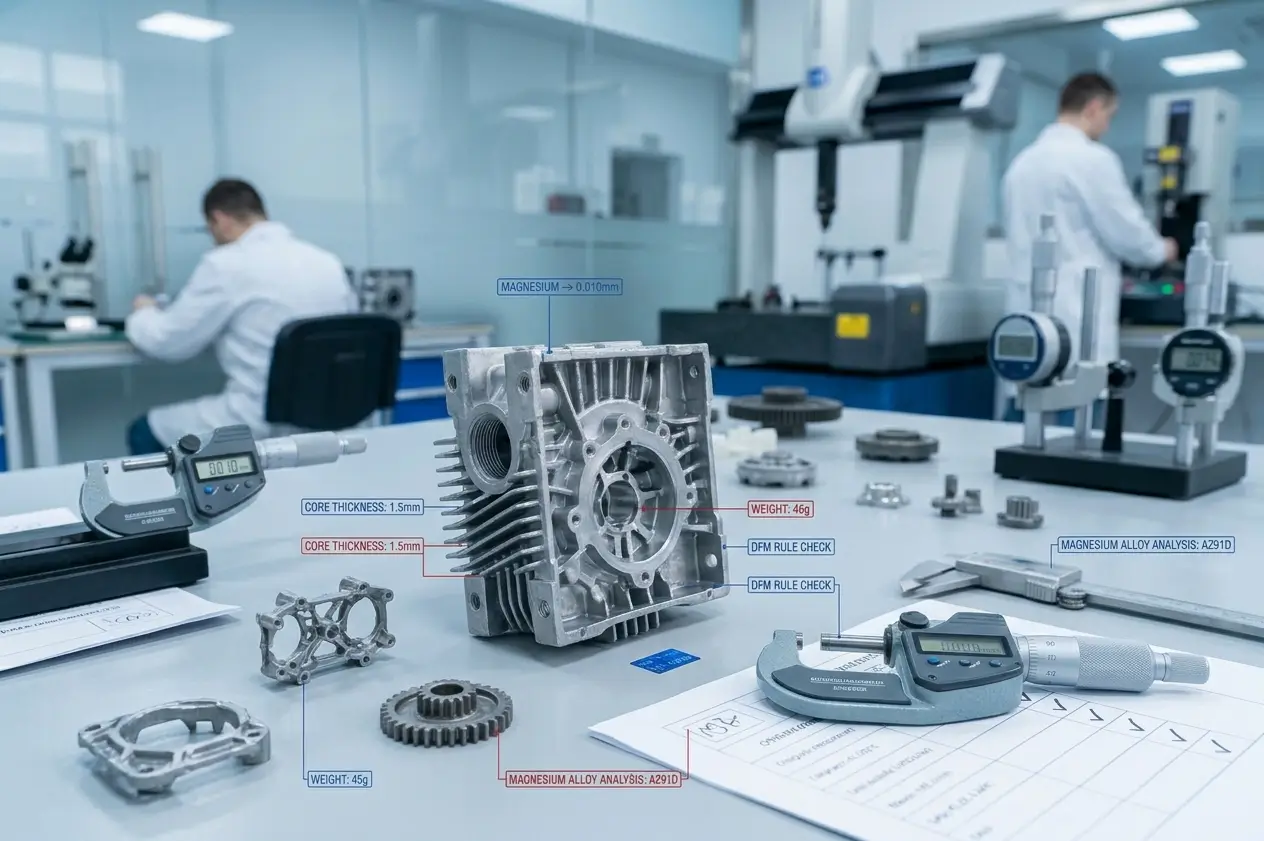
Magnesium Die Casting
For applications where low component mass is a key design consideration. Alloy selection, geometry, performance requirements, and finishing must be assessed for each project.
Material: Magnesium alloys, subject to project review.
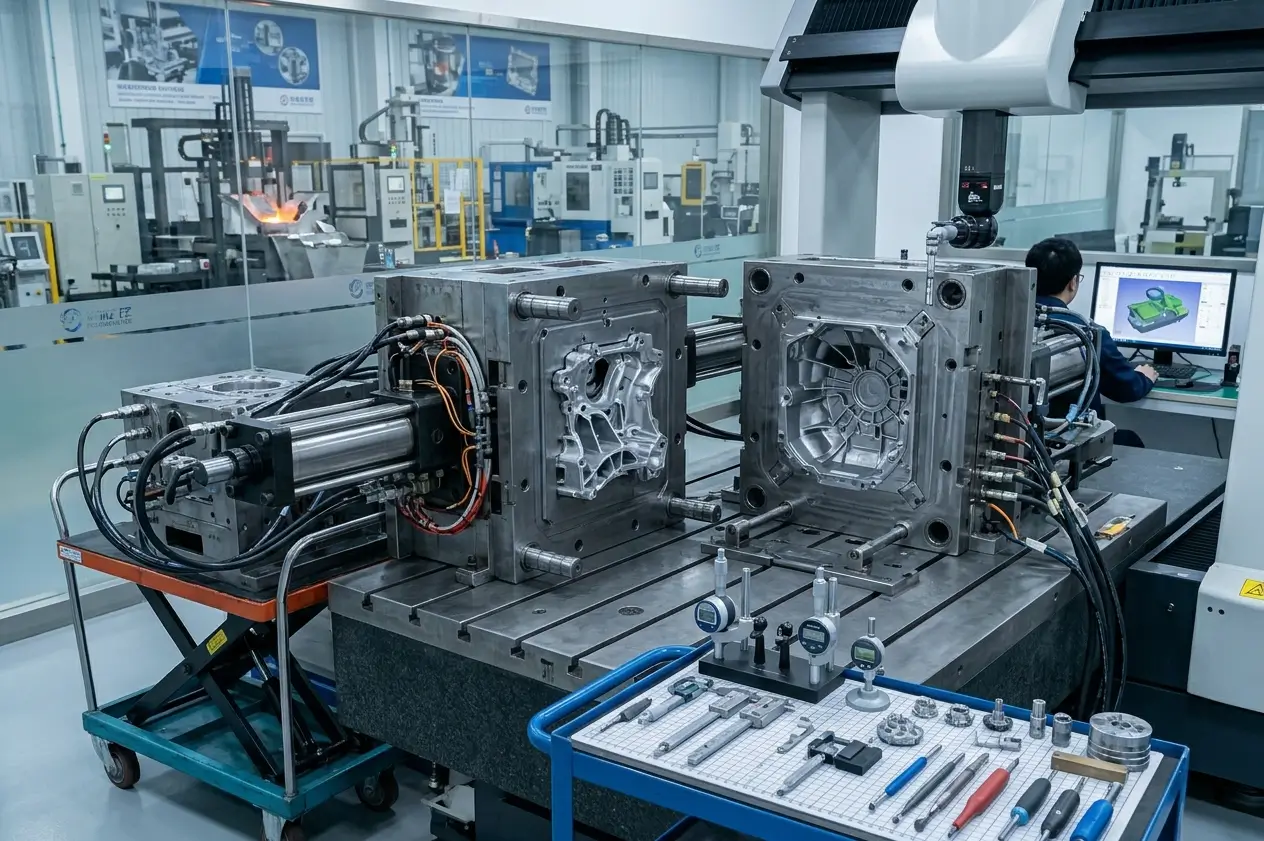
Tooling and Production Planning
We review part geometry, projected volumes, tool complexity, and quality requirements to help define an appropriate tooling and production strategy.
Production scope: Medium-volume programs through multi-million-unit runs, depending on part and tooling requirements.
ENGINEERING SPECIFICATIONS
Die Casting Capabilities & Tolerances
A die casting design must account for alloy behavior, mold filling, solidification, draft, parting lines, and downstream machining. We review critical dimensions and functional interfaces against your drawing before the tooling design is finalized.
| Engineering parameter | Capability / design consideration | What we review |
|---|---|---|
| Die casting processes | Hot-chamber and cold-chamber die casting | Alloy selection, component size, geometry, and production needs |
| Aluminum alloys | A380, A360, ADC12 | Mechanical requirements, castability, and finishing compatibility |
| Zinc alloys | Zamak 3, Zamak 5 | Feature definition, component function, and dimensional requirements |
| Magnesium alloys | Available alloy options assessed by project | Weight targets, component geometry, handling, and finishing |
| Dimensional tolerances | Defined for each part and drawing | Part size, alloy, die construction, datum scheme, and critical features |
| Wall thickness | Optimized for alloy, flow length, and component geometry | Thin-wall feasibility, filling behavior, and local thickness transitions |
| Draft angles | Set according to tool release and surface requirements | Draw direction, cavity depth, surface texture, and ejection |
| Holes and threads | Cast features or secondary machining, where required | Hole location, thread specification, engagement, and positional accuracy |
| Porosity and integrity | Managed through process planning and agreed inspection criteria | Pressure-tightness, structural loading, sealing, and internal quality needs |
| Surface finishing | Specified according to application and appearance requirements | As-cast surfaces, machining, coating, and cosmetic acceptance criteria |
| Secondary operations | Machining and other agreed finishing operations | Datums, critical interfaces, deburring, and final inspection requirements |
MATERIAL SELECTION
Die Casting Metals and Alloys We Support
Material selection affects weight, strength, corrosion behavior, castability, finishing, and total part cost. Share your operating environment and performance requirements so we can assess suitable alloy options for your application.
Aluminum A380
A common die casting alloy for housings, brackets, and industrial components requiring a practical balance of castability and mechanical performance.
Aluminum A360
Considered when corrosion behavior and pressure-related application requirements influence alloy selection. Suitability depends on the component and process specification.
Aluminum ADC12
Used for a range of cast housings and mechanical components. Confirm the required alloy designation and applicable material standard in the RFQ.
Zinc Zamak 3
A widely used zinc die casting alloy for detailed parts, hardware, and small precision components.
Zinc Zamak 5
Considered where the application calls for a different mechanical property balance from other common zinc alloys. Verify requirements against the relevant material specification.
Magnesium Alloys
Evaluated for lightweight components where mass reduction is important. Alloy availability, structural requirements, and finishing options need project-level confirmation.
Need a specific regional or customer material standard? Include
the exact designation and required documentation in your RFQ.
We will confirm availability before quoting.
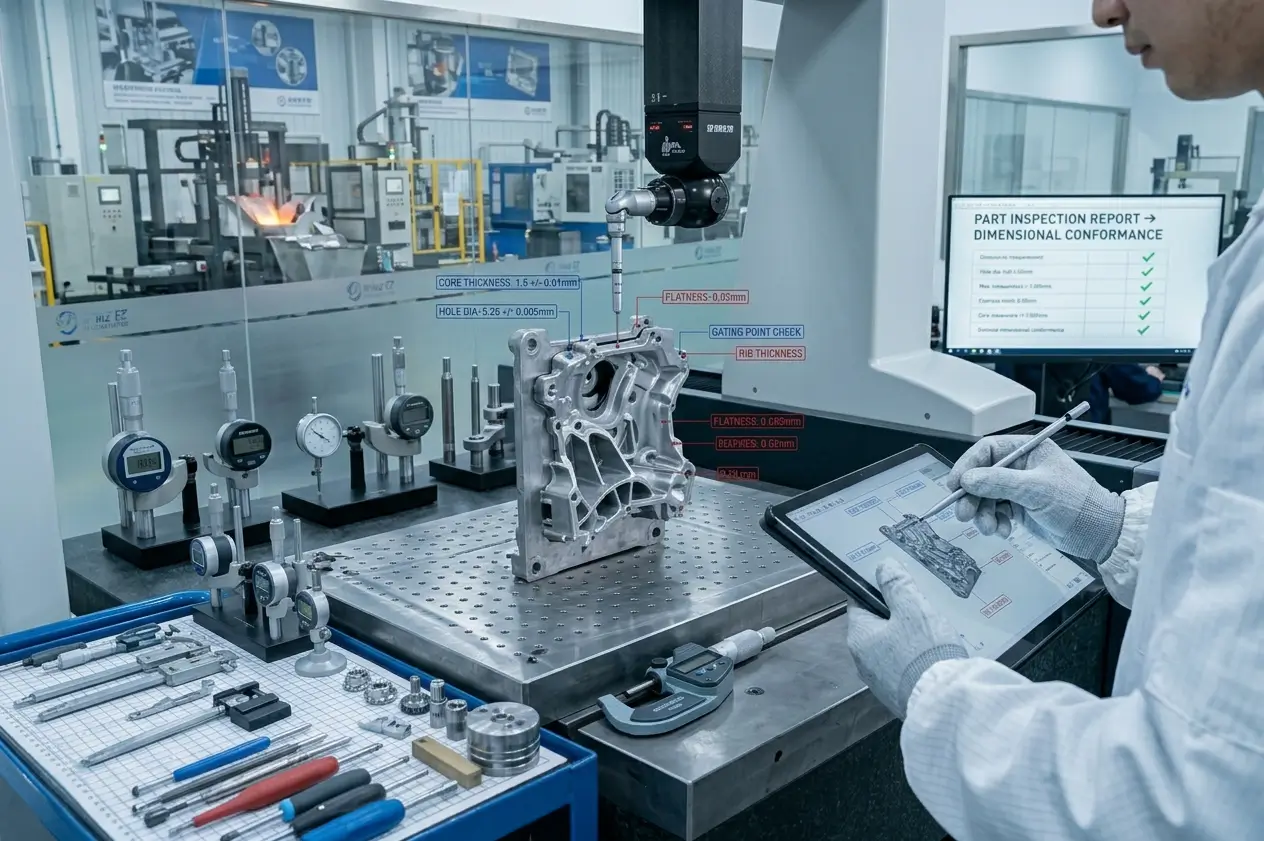
QUALITY ASSURANCE
Quality Documentation for International Manufacturing Projects
When you source die casting parts from China, you need visibility into how your components will be checked—not just a promise that they will meet specification. We recommend defining the inspection plan, material documentation, critical dimensions, and acceptance criteria before production begins.
Our stated quality resources include coordinate measuring machines (CMMs), optical projectors, and material certification records. The inspection method and deliverables should be agreed for each project and reflected in the quotation.
- Dimensional inspection against agreed drawings
- Material documentation, subject to alloy and supplier records
- First-article inspection (FAI), when agreed in the project scope
- Critical-feature and GD&T verification as specified
- Surface and cosmetic acceptance criteria defined before production
- Additional tests or reports confirmed before order placement
YOUR DIE CASTING PARTNER IN CHINA
Why Work With HLHCNC for Die Casting in China?
We know that choosing a manufacturing partner overseas involves more than comparing unit prices. You need technical alignment, clear responsibilities, dependable project communication, and agreement on how parts will be validated before they reach your facility.
Engineering-Led Communication
We work through your drawings, alloy requirements, critical dimensions, and intended application so the quote is based on the actual engineering scope—not only a 3D model.
Tooling Decisions With Production in Mind
We consider part geometry, expected lifetime volume, tooling complexity, and secondary machining requirements when assessing the manufacturing route.
Support for Overseas Buyers
Our English-speaking project engineering support helps international teams clarify technical questions, coordinate revisions, and align on next steps across time zones.
Quality Requirements Defined Up Front
We encourage customers to identify critical-to-quality features, inspection requirements, material records, and cosmetic standards before production approval.
Prototype-to-Production Perspective
HLHCNC supports a broader manufacturing workflow. If a design needs machining or another process for development or secondary operations, we can review the appropriate route with you.
Clear Commercial and Delivery Scope
We recommend agreeing on tooling ownership, sample approval, packaging, shipping terms, documentation, and change control before placing the order.
Our aim is to make sourcing die cast parts from China more transparent: clarify the technical requirements early, document the agreed scope, and reduce avoidable surprises between quotation and production.
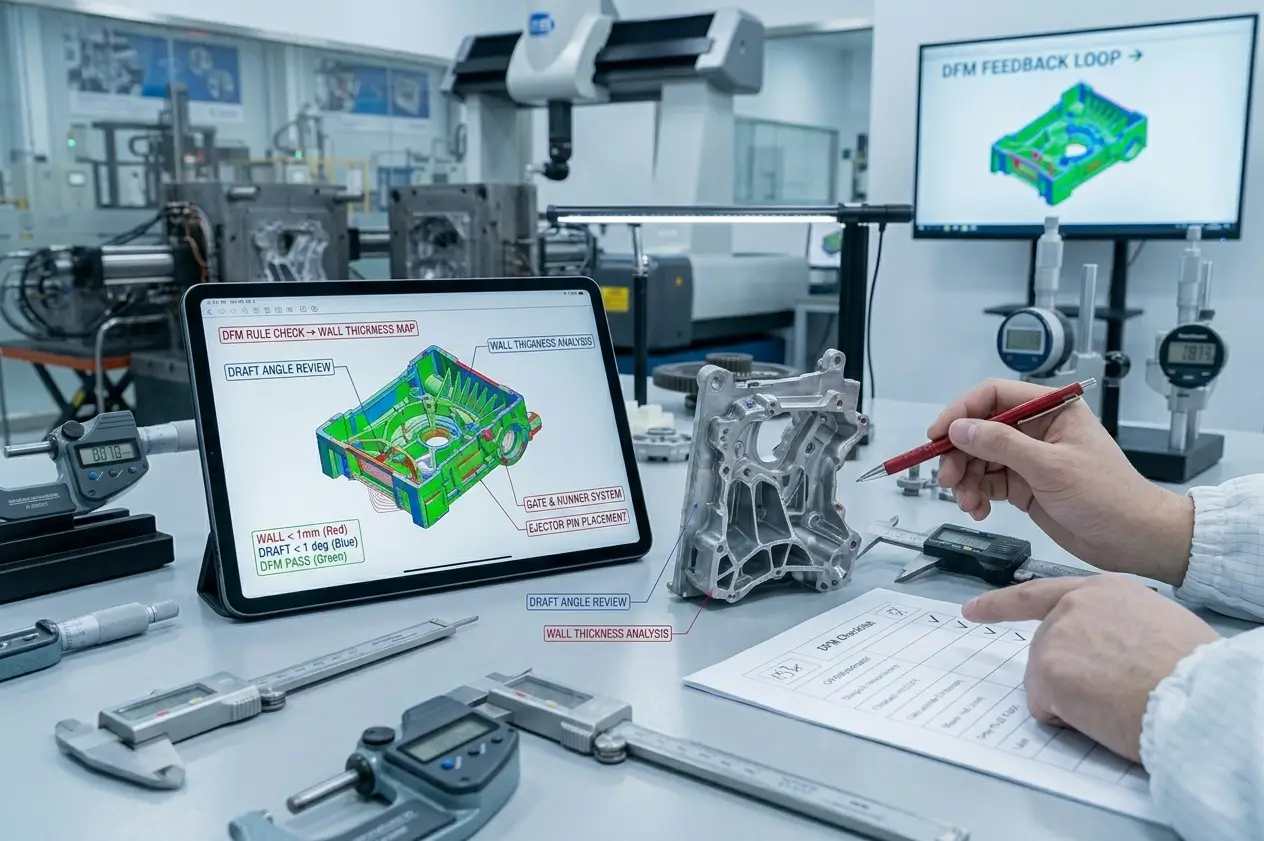
FREE QUOTE REVIEW
Before We Make the Die, Let’s Review the Design
A die casting design that looks correct in CAD may still present challenges during mold filling, solidification, ejection, or secondary machining. An early Design for Manufacturability (DFM) review helps identify potential issues before they become expensive tooling changes.
When you send us your CAD files, we can review the information needed to assess:
- Wall thickness transitions and potential hot spots
- Draft angles, draw direction, and parting-line placement
- Ribs, bosses, undercuts, and ejection considerations
- Gate, runner, and overflow considerations, where applicable
- Critical dimensions, datum strategy, and machining allowances
- Alloy selection, finishing, and inspection requirements
- Expected volume and tooling strategy
Include your 3D model, 2D drawing, target quantity, alloy specification, surface finish, and any critical performance requirements. If a requirement is still undecided, tell us what the part needs to do and we can identify the points that require engineering discussion.
Suggested files: STEP, STP, IGES, or another format accepted by
our quoting workflow. Attach a dimensioned drawing where
tolerances or GD&T are critical. Confirm file-format support
with the quoting team if needed.
WORKING WITH A CHINA DIE CASTING SUPPLIER
What Overseas Buyers Should Clarify Before Placing an Order
A successful China manufacturing project depends on a clear technical and commercial agreement. We encourage customers to resolve the following points before tooling or production is authorized.
How will we avoid drawing misunderstandings?
Identify the drawing revision, units, critical dimensions, datums, tolerances, and cosmetic requirements. Any proposed deviations should be documented and approved before production.
How will we verify the first parts?
Agree on sample quantities, inspection characteristics, required reports, and who approves the samples. Define what constitutes approval before the production release.
How will tooling and intellectual property be handled?
Document tooling ownership, storage and maintenance responsibilities, access to tooling, confidentiality terms, and permitted use of CAD files in the purchase agreement or applicable NDA.
How will shipping and import requirements be managed?
Confirm the destination, packaging, shipping method, agreed Incoterm, export documents, and responsibilities for import clearance, duties, and taxes before the order is finalized.
What happens if the design changes?
Establish a revision-control process. Changes to geometry, alloy, finishing, tolerances, or quantity can affect tooling, cost, timing, and inspection, so the impact should be reviewed and approved.
DIE CASTING FAQ
Frequently Asked Questions About Die Casting in China
What die casting materials does HLHCNC support?
Our stated alloy scope includes aluminum A380, A360, and ADC12; zinc Zamak 3 and Zamak 5; and magnesium alloys. Confirm the exact grade and applicable material standard during quotation.
Can you support both medium-volume and mass production?
Our die casting offering is intended for medium-volume through multi-million-unit production programs. Feasibility depends on part geometry, tooling, alloy, quality requirements, and demand forecast.
What tolerances can you achieve with die casting?
Tolerances depend on component dimensions, alloy, tooling design, and feature location. Provide a dimensioned drawing with critical dimensions and GD&T so the engineering team can assess the requirements. Secondary machining may be appropriate for some critical interfaces.
Can you machine or finish die cast parts after casting?
Secondary machining and finishing requirements can be reviewed as part of the project. Specify functional surfaces, holes, threads, coating requirements, and cosmetic acceptance criteria in the RFQ.
Can I receive material certificates and inspection reports?
Available documentation depends on the material supply chain and agreed project scope. Tell us which material records, dimensional inspection results, FAI documents, or additional tests you require so availability can be confirmed before order placement.
How do you protect our CAD files and intellectual property?
Discuss confidentiality and permitted file use before submitting sensitive design information. Where required, agree on an NDA, tooling ownership, access, and data-handling responsibilities in writing.
What should I send for a die casting quote?
Send a 3D CAD model, a dimensioned 2D drawing, alloy requirements, target quantity, surface finish, critical dimensions, inspection requirements, and delivery destination. If some information is unavailable, send what you have and identify the open questions.
How long does die casting tooling and production take?
Timing depends on part complexity, tooling design, material availability, sample validation, finishing, and production volume. We recommend requesting a project-specific schedule that separates tooling, sampling, approval, and production.
START YOUR PROJECT
Looking for a Die Casting Manufacturer in China?
Send us your CAD model and production requirements. We’ll review the part, clarify key engineering questions, and help determine the next steps toward a project-specific quotation.