
CHINA VACUUM CASTING SERVICES
Vacuum Casting in China
for High-Fidelity Prototypes and Low-Volume Production
Need production-like plastic parts without committing to injection mold tooling? HLHCNC helps engineering teams turn CAD designs into detailed polyurethane components for design validation, functional evaluation, product presentation, and low-volume manufacturing.
We use SLA or SLS master patterns to create silicone molds, then cast polyurethane materials to reproduce the geometry, surface detail, color, and appearance required by your project. From early design iterations to small pre-production batches, we help you evaluate the right route before scaling to production.
- Polyurethane parts made using silicone molds
- High-fidelity prototypes and low-volume batches
- Options for appearance, color, and surface texture
- Engineering communication for overseas customers
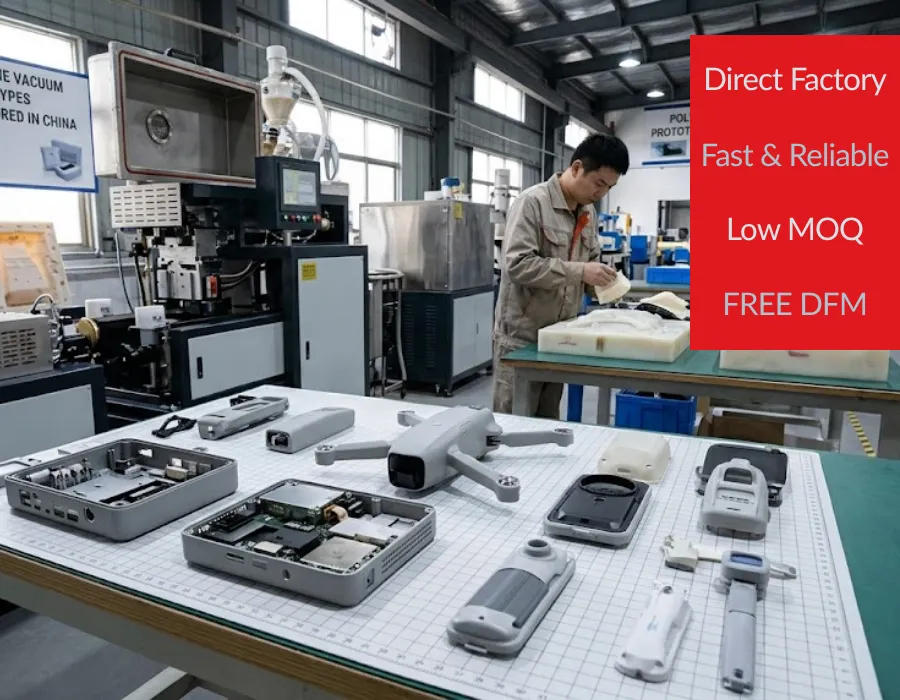
Bridge the gap between prototype development and production tooling.
WHY VACUUM CASTING?
Production-Like Parts Without Production Injection Tooling
When you need more than a one-off prototype, but full injection molding tooling is premature, vacuum casting can provide a practical intermediate manufacturing route. Silicone molds are made from a master pattern, allowing a limited number of polyurethane parts to be produced for evaluation and small-batch use.
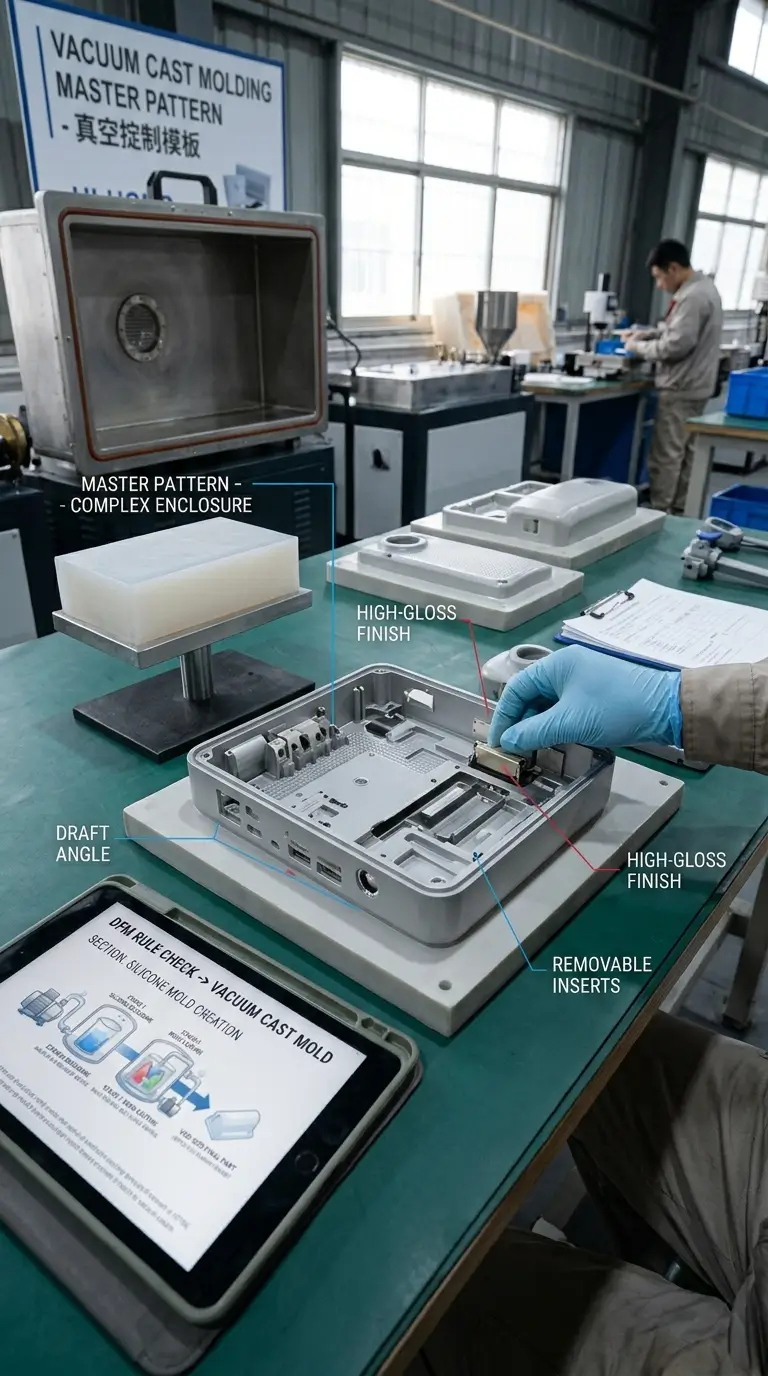
High-Fidelity Geometry
Silicone molds reproduce fine surface details and component geometry from a prepared master pattern. Results depend on pattern quality, mold construction, material behavior, and part design.
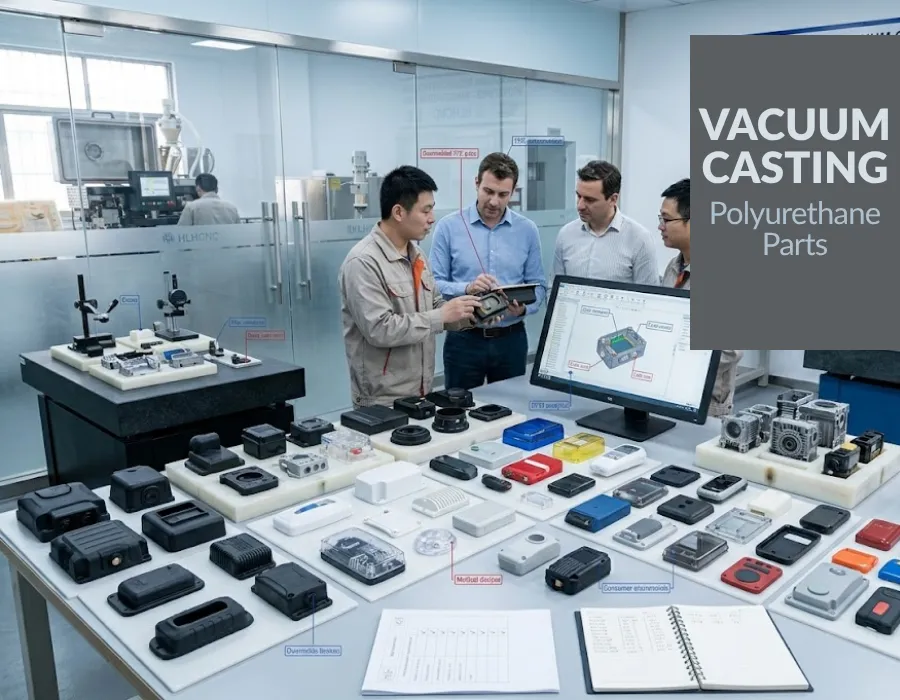
Appearance and Product Evaluation
Cast polyurethane parts can be produced in different colors and appearance options, supporting design reviews, presentation models, and evaluation of product form before tooling investment.
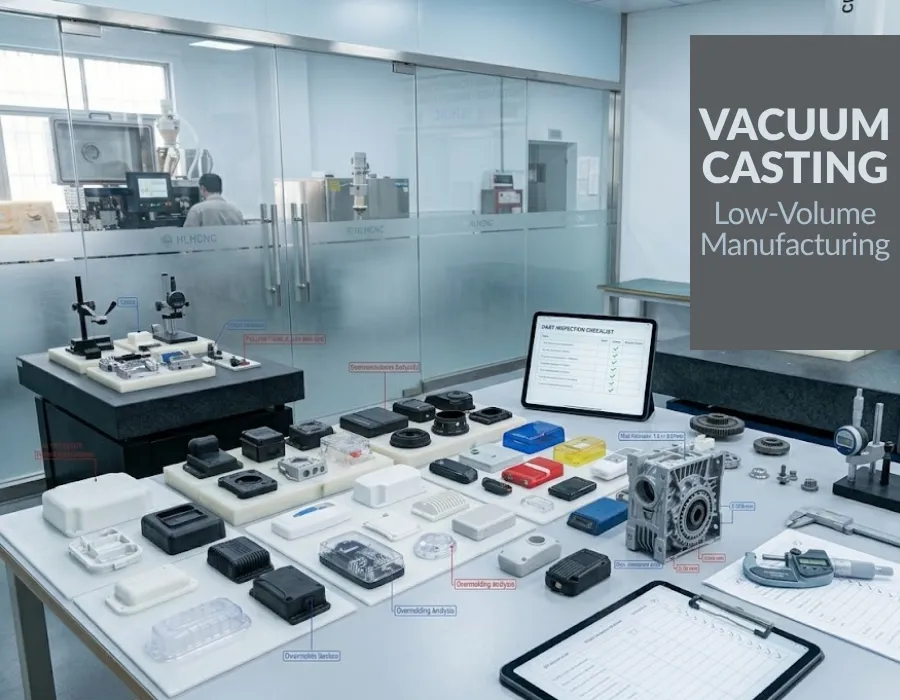
Low-Volume Manufacturing
Silicone mold casting supports small production batches without requiring a hardened-steel injection mold. The practical quantity depends on part geometry, mold life, material, and required finish.
FROM CAD TO CAST COMPONENT
How Our Vacuum Casting Process Works
Each stage affects the appearance, dimensional consistency, and repeatability of the finished part. We review the model and project requirements before confirming the production plan.
CAD and Design Review
We review your 3D model, part dimensions, wall thickness, undercuts, surface expectations, and target quantity.
Master Pattern Production
An SLA or SLS master pattern is prepared according to the geometry, detail, and surface requirements of the project.
Silicone Mold Preparation
A silicone mold is formed around the master pattern. Mold split lines, vents, gates, and part release are considered according to the component design.
Polyurethane Casting and Finishing
Polyurethane is cast under vacuum to help reduce trapped air. The parts are then demolded, finished, and checked against the agreed requirements.
Actual process steps, achievable results, and inspection scope vary with part geometry, selected polyurethane system, mold design, and customer specifications.
ENGINEERING SPECIFICATIONS
Vacuum Casting Capabilities and Design Considerations
Vacuum casting is well suited to many detailed, low-volume parts, but it does not reproduce every material or performance characteristic of an injection-molded thermoplastic. We assess the part’s geometry, selected resin, cosmetic requirements, and intended use before recommending a manufacturing approach.
| Parameter | Capability | Engineering considerations |
|---|---|---|
| Master pattern | SLA or SLS pattern routes | Surface quality, detail resolution, pattern accuracy, and preparation |
| Mold type | Silicone molds | Parting line, mold split, vents, gates, undercuts, and demolding |
| Part quantity | Typically 10 to 100+ parts per mold lifecycle as a planning reference | Actual yield depends on part size, geometry, resin, mold wear, and quality criteria |
| Dimensional accuracy | Defined according to part requirements | Master pattern accuracy, resin shrinkage, mold deformation, and part geometry |
| Wall thickness | Evaluated per component | Resin flow, air evacuation, curing behavior, and local thickness changes |
| Undercuts and complex features | Potentially feasible with suitable mold design | Demolding direction, flexible silicone, feature durability, and split-line placement |
| Surface appearance | Can reproduce master-pattern detail | Pattern finish, mold condition, parting lines, post-processing, and cosmetic criteria |
| Color and texture | Options assessed by project | Color reference, texture sample, gloss level, and acceptance standard |
| Mechanical properties | Depends on selected polyurethane system | Hardness, stiffness, elongation, impact behavior, and service environment |
| Inspection | Based on agreed drawing and quality plan | Critical dimensions, appearance, sample approval, and required reports |
POLYURETHANE MATERIAL SELECTION
Vacuum Casting Materials for Different Product Requirements
Vacuum casting typically uses polyurethane casting resins formulated to simulate selected properties of production plastics. The right choice depends on whether your priority is appearance, flexibility, rigidity, impact behavior, transparency, or a particular surface finish.
ABS-Like Polyurethane
A common option for rigid housings, enclosures, and general prototype parts where a balance of stiffness and impact performance is desired.
Discuss: Required rigidity, finish, and impact conditions.
PC-Like Polyurethane
Considered for selected rigid components where toughness or a polycarbonate-like performance profile is a design objective. The cast material is not identical to production polycarbonate.
Discuss: Impact requirements, optical needs, and service conditions.
PP-Like Polyurethane
Used in selected prototype applications where a polypropylene-like feel or behavior is desired. Verify suitability for the actual operating environment.
Discuss: Flexibility, chemical exposure, and functional loads.
Flexible and Elastomeric Polyurethane
For parts that need flexibility or a softer tactile response, such as selected covers, grips, seals, and protective features.
Discuss: Hardness, deformation, rebound, and repeated-use requirements.
Transparent or Translucent Polyurethane
Can be considered for selected visual prototypes, lenses, light guides, and transparent-style covers, depending on the resin and optical requirements.
Discuss: Clarity, color tint, surface quality, and optical acceptance.
High-Detail Cosmetic Casting Resins
Selected resin systems and finishing methods can support appearance models, presentation parts, and product design reviews where surface detail is important.
Discuss: Color reference, gloss, texture, and visible parting lines.
These are application-oriented resin categories, not a guarantee that every named thermoplastic has an exact polyurethane equivalent. Confirm the specific resin grade, technical data, color options, and availability before ordering.
QUALITY AND SAMPLE VALIDATION
Define What a Successful Prototype Looks Like
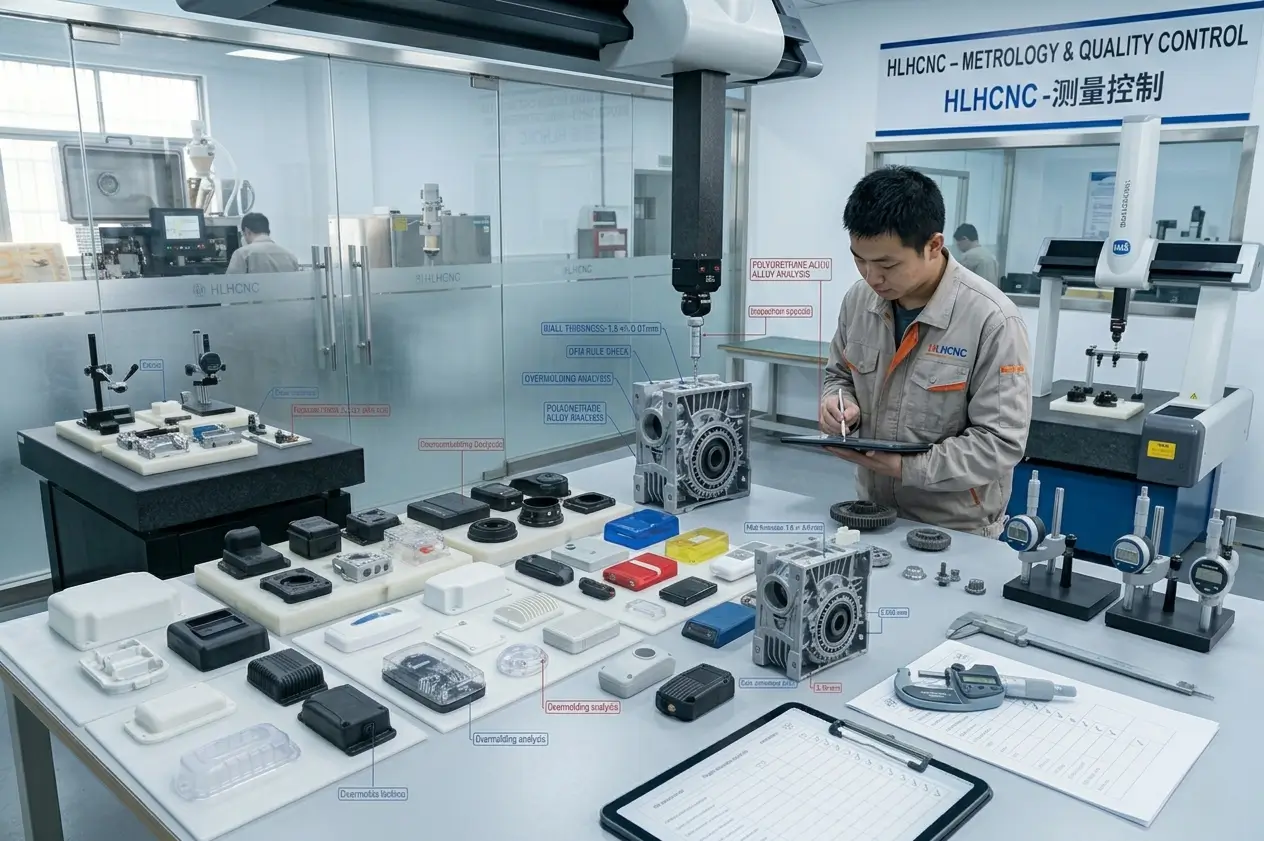
When outsourcing prototypes to China, clear acceptance criteria are essential. A part may look correct but still miss a critical dimension, color target, or functional requirement. We encourage customers to define these points before production starts.
Our engineering review can help establish the inspection priorities for your project. The actual inspection methods and deliverables should be confirmed in the quotation and agreed project scope.
- Dimensional checks against agreed drawings
- Surface appearance and cosmetic inspection
- Color, gloss, and texture references where specified
- Material information for the selected polyurethane system
- Sample review and customer approval where required
- Additional tests or inspection reports agreed before production
Discuss Your Validation Requirements
YOUR VACUUM CASTING PARTNER IN CHINA
Why Choose HLHCNC for Vacuum Casting in China?
We understand that sourcing parts from overseas involves more than finding a low unit price. You need a supplier who understands your design intent, communicates clearly, and helps define how prototypes will be reviewed before you commit to the next stage.
Engineering-Led Design Review
We review geometry, surface expectations, target quantities, and functional requirements to identify questions that should be resolved before pattern and mold preparation.
Prototype-to-Production Perspective
Vacuum casting can help validate a design before larger tooling investment. If your next stage requires CNC machining, injection molding, or another process, we can discuss the appropriate route.
Communication for International Teams
Our English-speaking project engineering support helps clarify technical questions, drawing revisions, sample expectations, and project milestones across time zones.
Requirements Agreed Up Front
We encourage customers to define dimensions, cosmetic criteria, material expectations, and sample approval requirements before production so that acceptance is based on a shared specification.
Low-Volume Flexibility
Silicone mold casting is suited to limited production quantities where a conventional production mold may not yet be justified. Actual quantity and cost depend on part and mold requirements.
Clear Project Scope
We recommend agreeing on material selection, color matching, finishing, inspection, packaging, delivery terms, and file confidentiality before the order is placed.
DESIGN FOR MANUFACTURABILITY
Before We Make the Mold, Let’s Review Your CAD Design
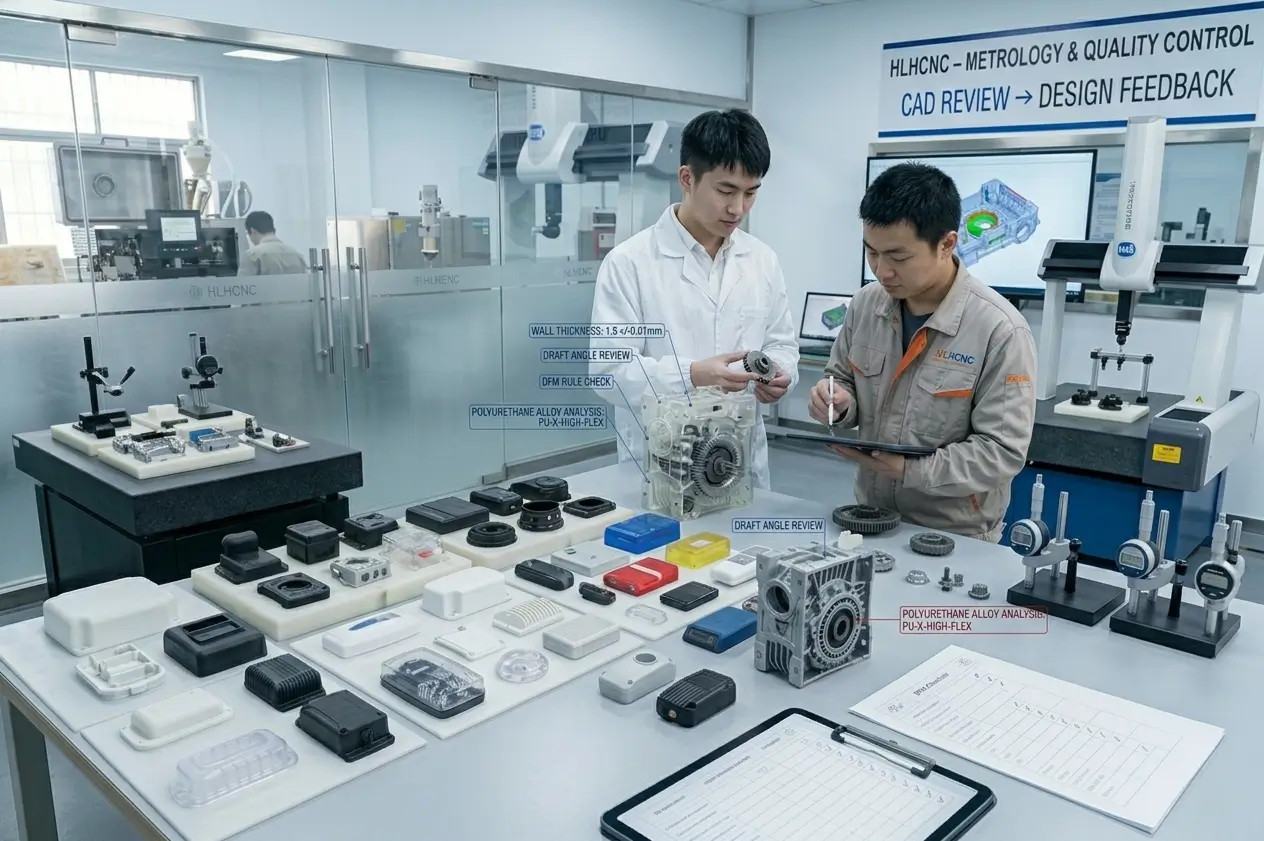
A small design decision can affect master pattern preparation, silicone mold construction, demolding, surface quality, and dimensional consistency. Reviewing the model early helps identify manufacturing risks before time is invested in mold preparation.
When you submit your CAD files, we can review relevant items such as:
- Wall thickness transitions and deep or narrow features
- Undercuts, parting lines, and demolding direction
- Potential air traps and mold venting considerations
- Master pattern finish and visible surface requirements
- Critical dimensions, tolerances, and inspection datums
- Material hardness, flexibility, color, and appearance targets
- Target quantity and expected mold lifecycle
Send a 3D model, dimensioned drawing, target quantity, material preferences, and any visual references. If you’re not sure which polyurethane material is suitable, describe the part’s function and we can identify the requirements that need confirmation.
Suggested submission: STEP, STP, or IGES model, plus a 2D drawing where dimensions and tolerances matter. Confirm supported file formats with the quoting team if your CAD format differs.
WORKING WITH A CHINA MANUFACTURING PARTNER
What International Buyers Should Clarify Before Ordering
A successful vacuum casting project starts with clear expectations. We encourage international customers to align on the following details before the first pattern is produced.
Will the material behave like our production plastic?
Vacuum casting uses polyurethane systems, not the same manufacturing process as thermoplastic injection molding. A resin may simulate selected characteristics, but it will not necessarily reproduce all mechanical, thermal, chemical, or regulatory properties of the final production material. Identify the tests the part must pass.
How will cosmetic quality be assessed?
Share reference images, color samples, gloss or texture expectations, and the surfaces that are most visible. Agree on acceptable parting lines, gate marks, and post-processing before the job begins.
How do we manage revisions and sample approval?
Specify the CAD revision and drawing version for the quotation. Agree on which samples require approval and how design changes will be documented before further parts are made.
How is intellectual property protected?
If your design is confidential, discuss an NDA and the permitted use of CAD files before sharing sensitive information. Document responsibilities and applicable confidentiality terms in writing.
How will international delivery be handled?
Confirm the destination, packaging requirements, shipping method, agreed Incoterm, export documentation, and responsibilities for import clearance, duties, and taxes before the order is finalized.
VACUUM CASTING FAQ
Frequently Asked Questions About Vacuum Casting in China
What is vacuum casting?
Vacuum casting is a process in which a master pattern is used to create a silicone mold, and polyurethane resin is cast into the mold under vacuum to help reduce trapped air. It is commonly used for detailed prototypes and limited production quantities.
How many parts can be produced from one silicone mold?
A planning reference for this service is approximately 10 to 100+ parts per mold lifecycle. Actual output depends on component geometry, mold wear, resin, and the quality requirements for each part. We will confirm feasibility for your design.
What materials are available for vacuum casting?
Vacuum casting uses polyurethane casting resins with different characteristics. Options may include rigid, flexible, transparent, or thermoplastic-like formulations, subject to material availability. Specify the properties your part needs rather than relying on a polymer name alone.
Are vacuum cast parts the same as injection-molded parts?
No. Vacuum cast parts are generally made from polyurethane resin in silicone molds. They can simulate selected properties and appearances of injection-molded plastics, but material behavior, durability, and process characteristics may differ.
Can vacuum casting produce detailed or cosmetic parts?
It can reproduce substantial surface detail from a well-prepared master pattern. Final appearance depends on pattern quality, mold condition, resin, finishing, and part design. Share visual references and acceptance criteria when requesting a quote.
What tolerances can vacuum casting achieve?
Accuracy depends on the master pattern, mold design, resin shrinkage, geometry, and measurement method. Provide a dimensioned drawing with critical tolerances so the engineering team can assess the requirements before quoting.
When should I choose vacuum casting instead of injection molding?
Vacuum casting is often considered for prototypes, appearance evaluation, and limited batches where production injection tooling is not yet justified. Injection molding may be more suitable for sustained higher-volume production or when a specific production thermoplastic is required.
What files do I need to request a quote from China?
Provide a 3D CAD model, a dimensioned drawing where applicable, target quantity, material or performance requirements, surface finish, color references, and delivery destination. Identify any critical dimensions or functional tests.
Can HLHCNC ship vacuum cast parts internationally?
International delivery requirements can be discussed during quotation. Confirm destination, packaging, shipping terms, documentation, and the allocation of import-related costs before order placement.
START YOUR PROTOTYPE PROJECT
Looking for a Vacuum Casting Supplier in China?
Send us your CAD model and project requirements. We’ll review the geometry, target quantity, material expectations, and appearance criteria to help establish the right next steps for your quotation.